An operational approach to strengthening the quality of cybersecurity decisions.
In many incidents, the problem isn't just a technical flaw.
It also appears when an alert is misinterpreted, a doubt is dismissed too quickly, a click is made out of habit, or a decision is made under pressure without sufficient reflection.
The Cyber Serenity Method acts upstream.
It helps to detect human conditions that weaken vigilance: mental overload, constant urgency, fatigue, uncertainty, overconfidence, or lack of attention.
It does not replace standards, procedures, or safety devices.
It reinforces its actual application, where cybersecurity concretely becomes a matter of perception, discernment, and decision-making.
Humans are not the weak link in cybersecurity.
It is often the last point of vigilance, sometimes the last bulwark, when technology alone is no longer enough.
Why the Cyberserenity Method (CSM)?
Because digital often moves faster than our ability to observe, understand, and decide.
Because fatigue and pressure silently degrade the quality of choices.
Because security depends not only on the tools but also on the state of attention of those who use them.
The Cyberserenity Method helps to:
- reduce risky automation,
- better perceive weak signals,
- strengthen individual and collective vigilance,
- improve the quality of decisions in tense situations,
- put the human back at the heart of security.
Concretely, the MC is interested in those moments when:
- an alert is minimized too quickly,
- a doubt is not expressed,
- a validation is given under pressure,
- a weak signal is not seen,
- A decision is made in an emergency without sufficient reflection.
That's often where fragility begins.
The Cyberserenity Method begins at this point.
Who is this approach for?
To those who work in a demanding digital environment:
- Leaders and managers,
- Cybersecurity, IT, SOC, CERT, or support teams,
- employees exposed to a heavy information load,
- organizations that want to strengthen their vigilance without fueling burnout.
No particular technical expertise is required.
What matters is the will to see better, understand better, and decide better.
Scientific Foundations
The Cyberserenity Method is inspired by recognized work in neuroscience, decision psychology, and human factors. This work shows how, under the effects of stress, overload, urgency, or uncertainty, perception and judgment can become weakened.
Discover the scientific foundations
An approach compatible with existing frameworks
The Cyberserenity Method does not oppose frameworks.
On the contrary, she seeks to make them live better in reality.
It dialogues with the organizations' already known frameworks, standards, and obligations:
ANSSI, NIS2, CNIL, ISO, PART-IS.
His contribution is simple:
Make the human aspect of security more readable, where formal requirements meet the real conditions of work, attention, and decision-making.
Explore the Cyberserenity Method
The MC is discovered through several free resources, freely accessible according to your needs:
Free guides
To understand the fundamental benchmarks of the approach and delve deeper into its logic.
- Mini-guide : a simple and accessible first entry
- Expert guide a more structured in-depth review of the method
- Guide #2 Human Postures in Cybersecurity


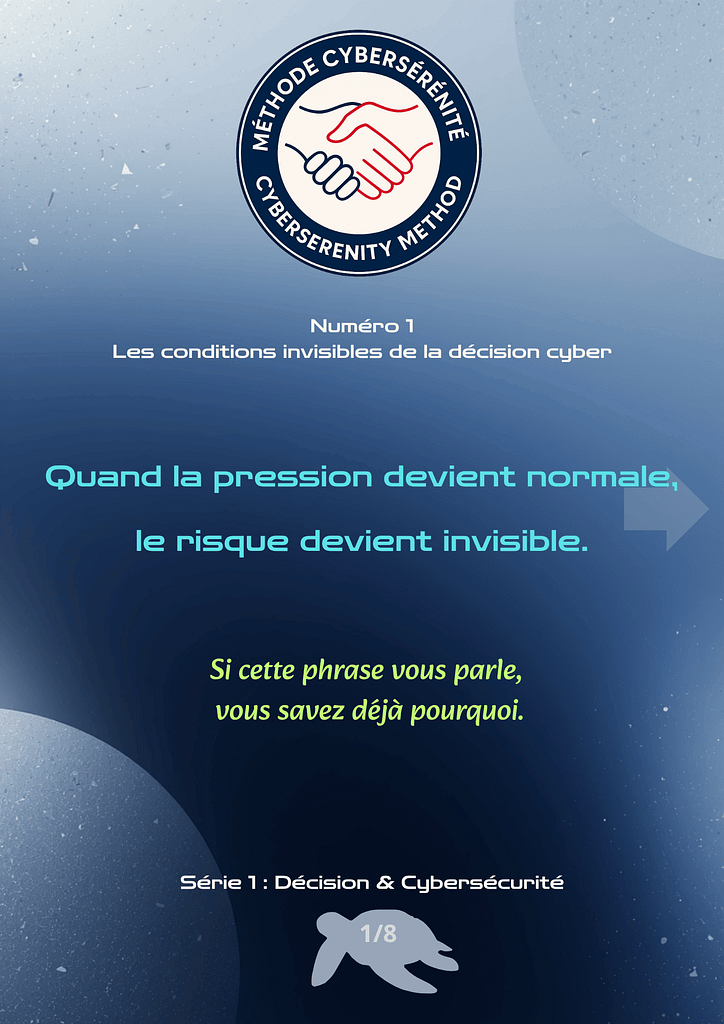
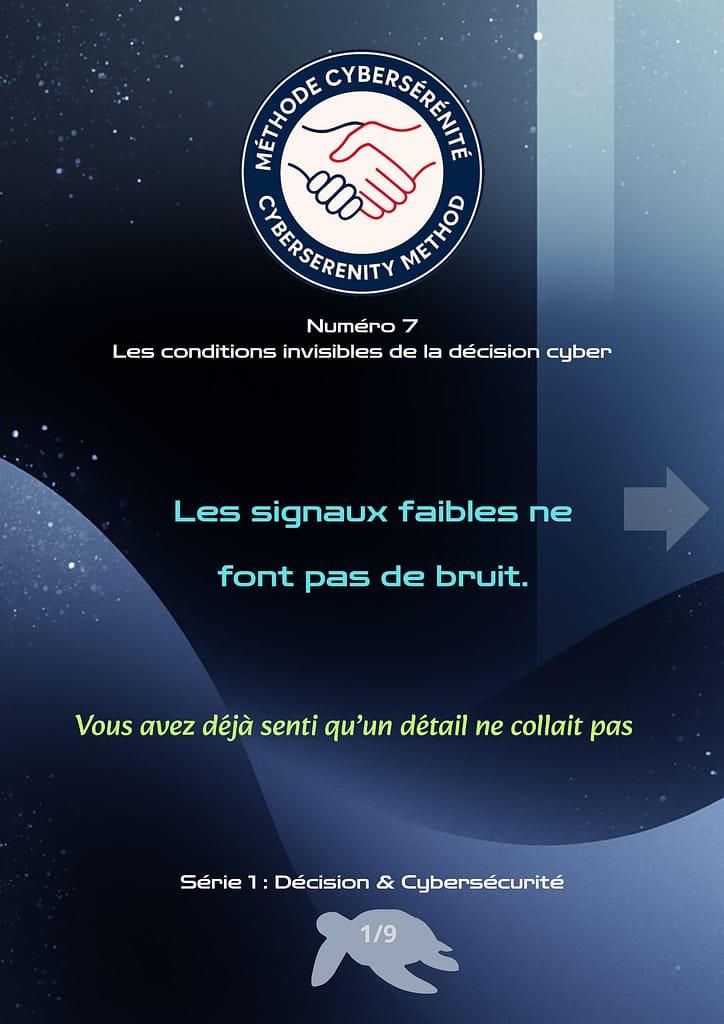
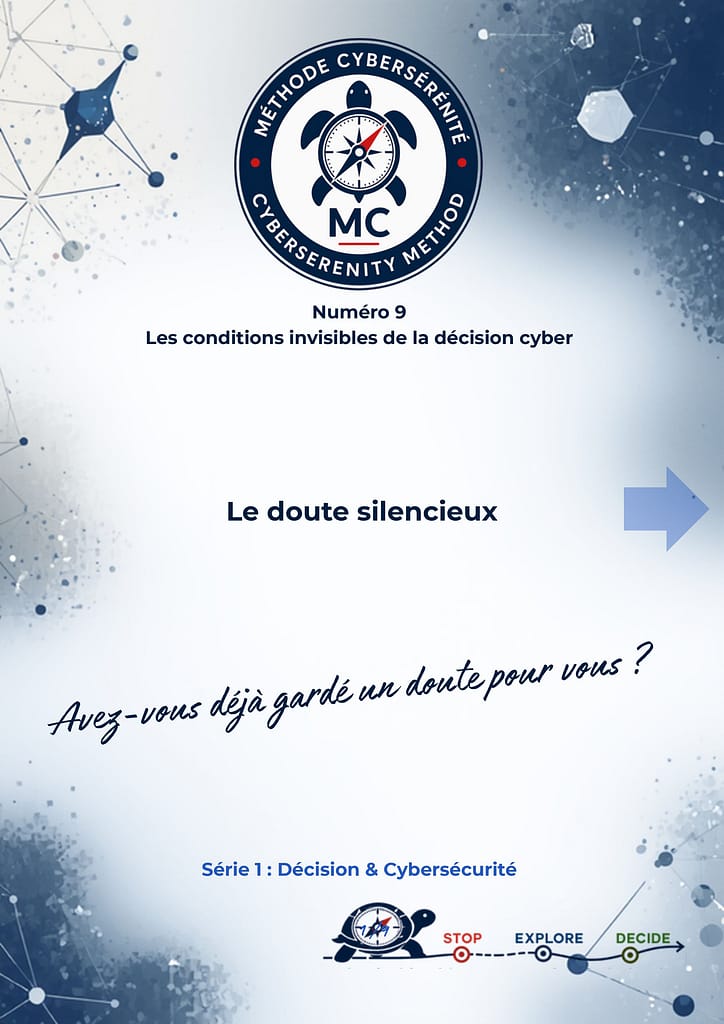
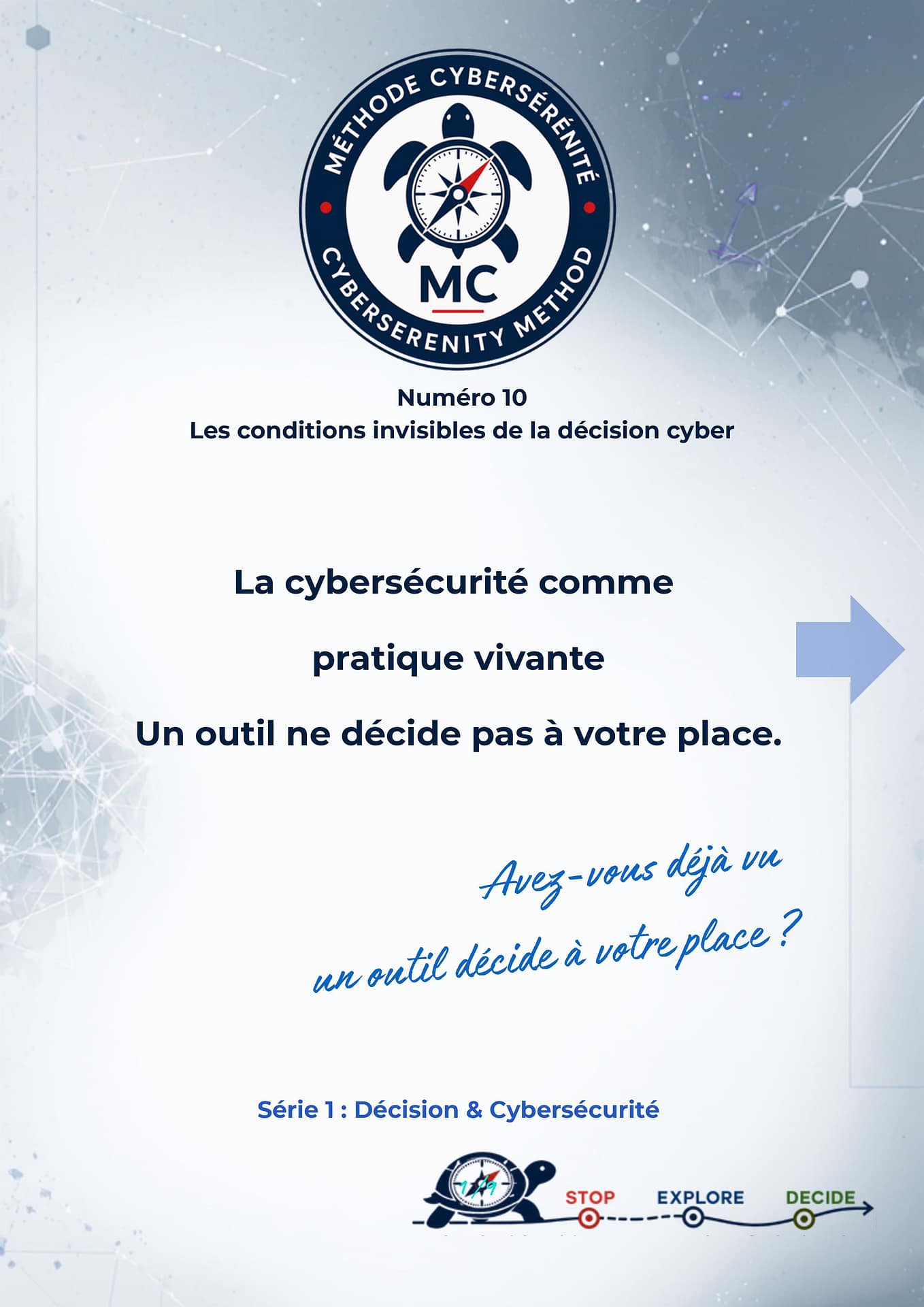
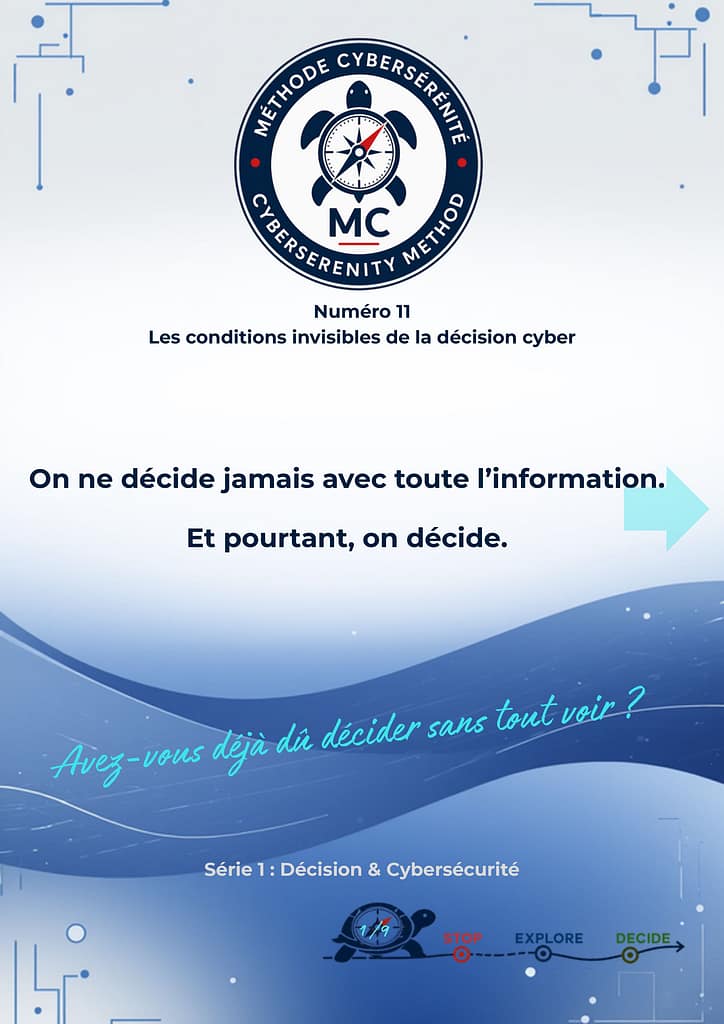
Series 1: Decision & Cybersecurity
A progressive publication to keep the method alive over time, by themes, situations, and extensions.


LinkedIn Carousels
Follow the Cyberserenity Method on LinkedIn: Official LinkedIn Page
Short, visual, and educational formats to discover MC from a more direct, concrete, and shareable angle.
Cyber Serenity Method Videos
Discover the Cyberserenity Method in 75 seconds
A short video to understand the essence of the approach:
How to connect the ANSSI, NIS2, CNIL, or ISO frameworks to an inner posture based on calmness, breathing, and clarity.